 8.9
Celestron
Equatorial Reflector Telescope for Family Use
$290
For beginners Reflector Equatorial mounts
Standard reflector size for exploring deep-space objects and star clusters 8 telescopes · 3 brands
8.9
For beginners Reflector Equatorial mounts
 8.4
For beginners For moon viewing Reflector Equatorial mounts
 8.4
 8.3
 8.0
Red For moon viewing Tripod included With phone adapter Reflector For astrophotography
 7.3
For moon viewing With phone adapter Reflector For deep sky For astrophotography
 5.5
Yes, the mirror gathers enough light for star clusters, the Orion Nebula, and the brighter galaxies as faint smudges. Faint objects need dark skies to show well, so a light-polluted backyard limits what you will see.
Newtonian reflectors need their mirrors aligned occasionally, and a 114mm tube is small enough that the process is manageable with a collimation cap or laser. Many owners check alignment before a session and adjust the secondary or primary screws as needed.
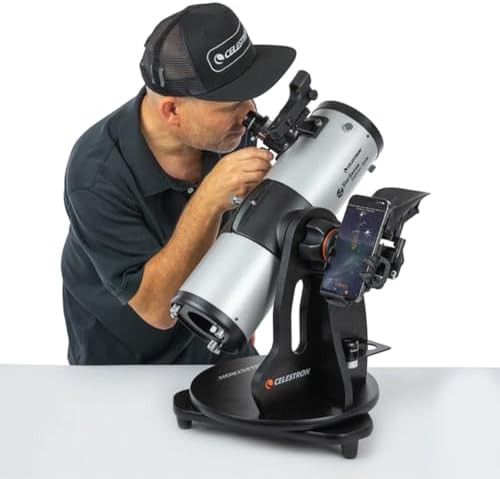
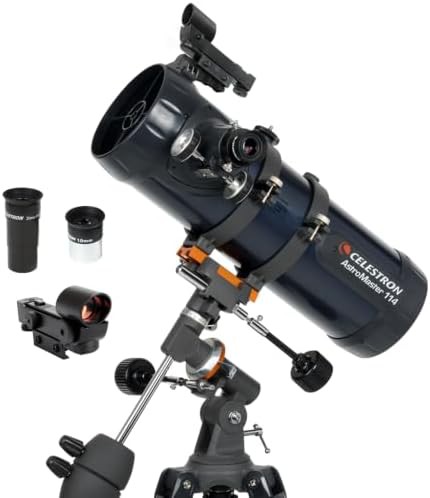
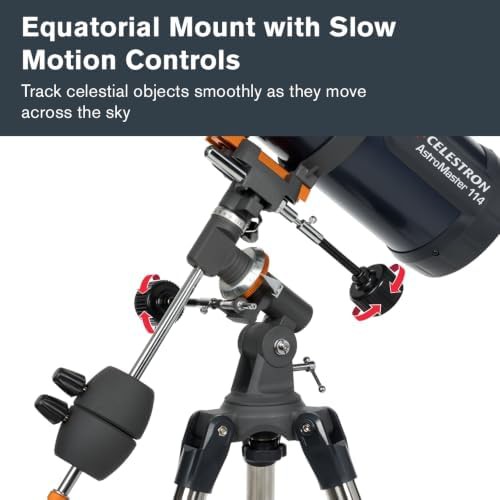
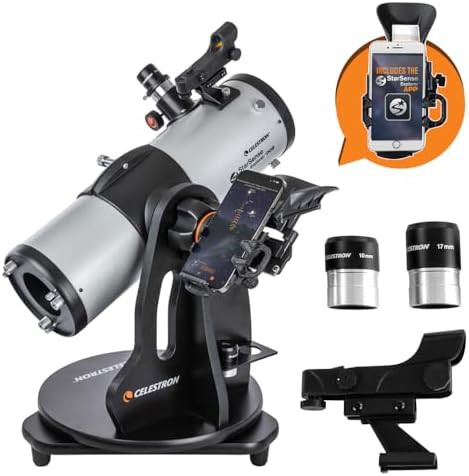
An equatorial mount tracks objects with one knob, which helps at higher magnification, but it takes practice to point naturally. An alt-az or tabletop Dobsonian base is quicker to aim and set up, which suits casual observing.
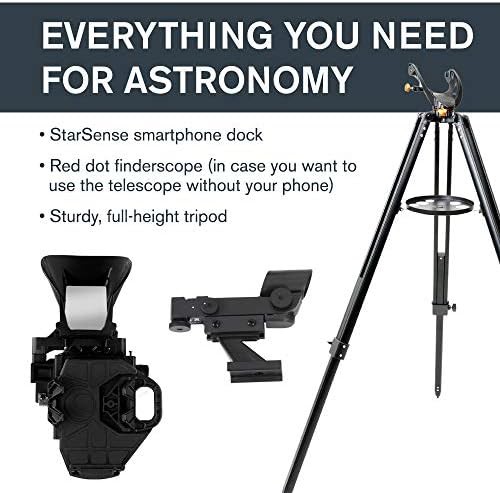
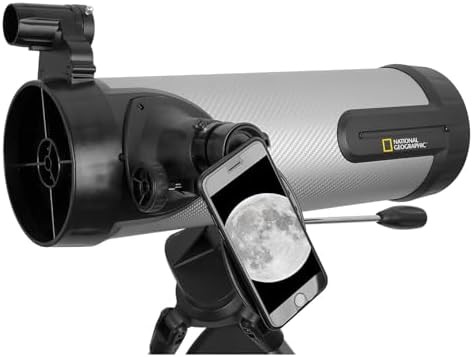
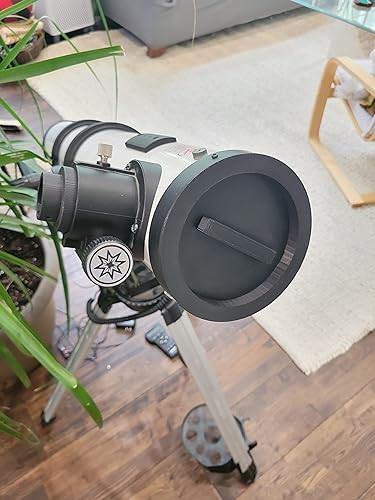
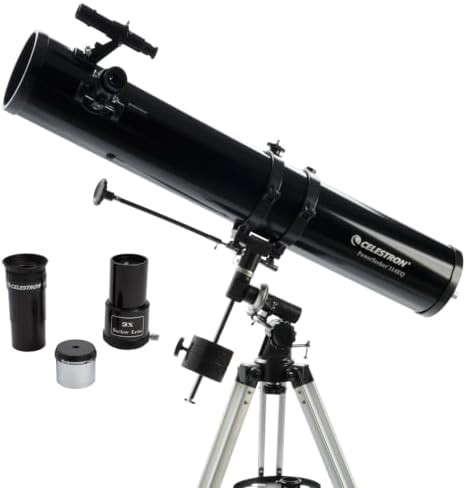
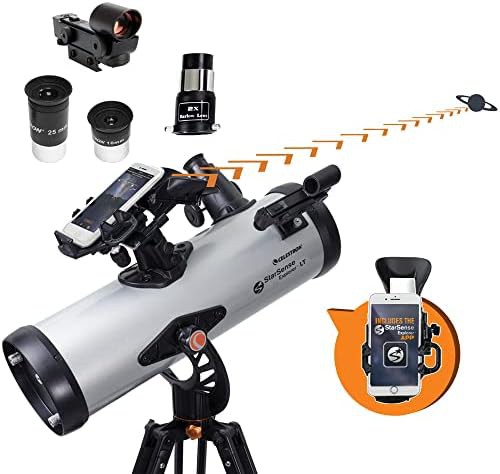
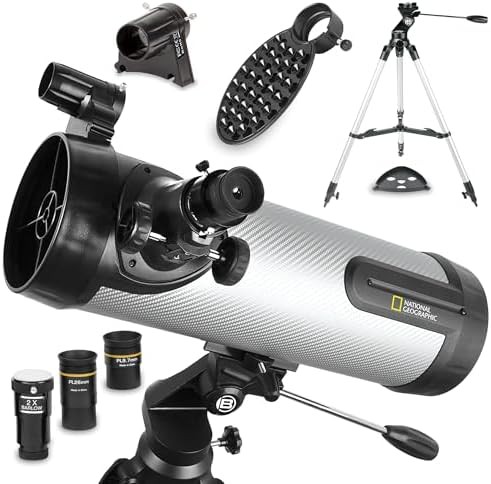
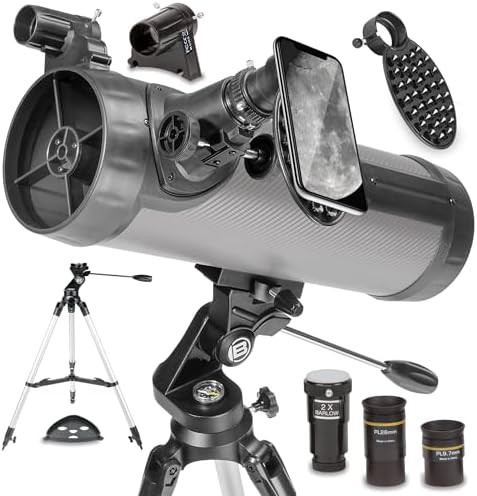
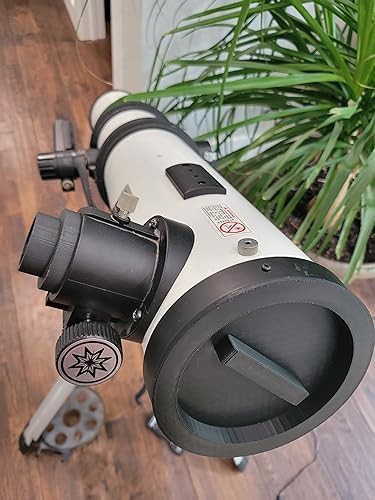
These scopes commonly come with two eyepieces, a Barlow lens, a red-dot finder, and a smartphone adapter for holding a phone over the eyepiece. A dust cap protects the open tube end when the scope is stored.
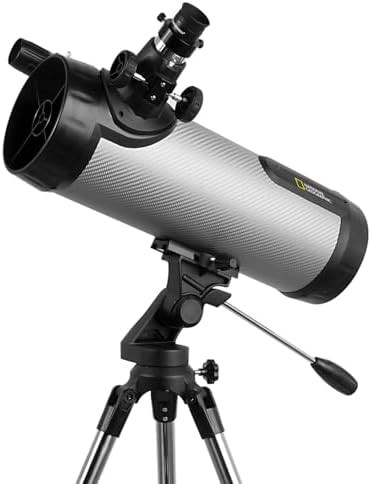
A 114mm telescope is a reflector, which means it gathers light with a curved mirror at the back of the tube rather than a lens at the front. That mirror size sits in a practical middle ground: enough light grasp to pull in star clusters and the brighter deep-space objects, while the tube stays short enough to carry outside in one trip. Most of these are Newtonian reflectors on either an equatorial mount or a simple alt-az base.
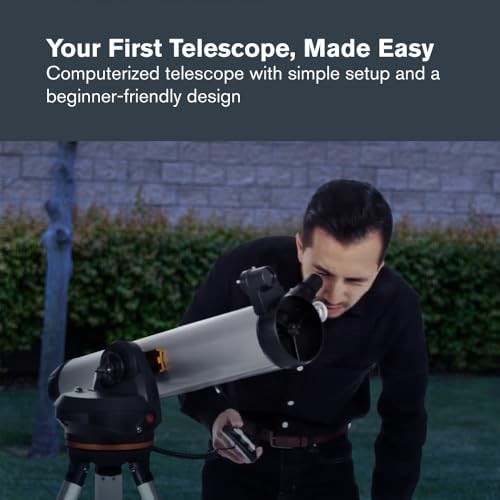
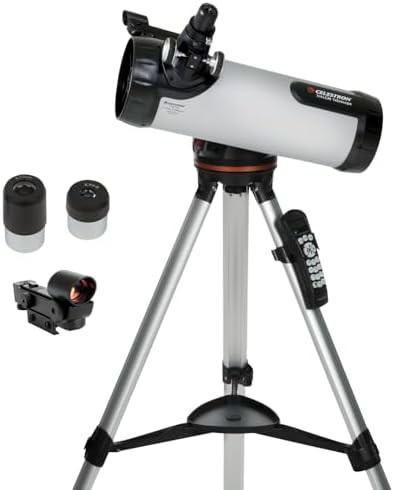
The mount is the real fork in the road here. Equatorial mounts track objects by turning one slow-motion knob, which suits someone who wants to follow a planet or cluster for a while, while alt-az and tabletop Dobsonian bases trade that tracking for faster setup and a more intuitive push-to-aim motion. Computerized versions add a hand control that slews to a chosen target, and smartphone-guided models use a phone as the finder.
Tubes come in standard black or white metal, and at least one carbon-fiber option shows up with a 500mm focal length at f/4.4. That shorter focal ratio gives a wider field, which helps when you are sweeping for clusters rather than chasing high magnification. Eyepiece kits vary, but two eyepieces and a Barlow are common, along with a red-dot finder and a smartphone adapter for holding a phone over the eyepiece.
The moon and the brighter planets hold up well, and the mirror size is enough to resolve some detail in globular clusters and show the Orion Nebula as more than a smudge. It is a scope you can set up in a backyard and use without a long alignment ritual, which is why it turns up as a first serious instrument. If you want something that packs into a car for a dark-sky trip, the tube is short but the mount still takes up room.