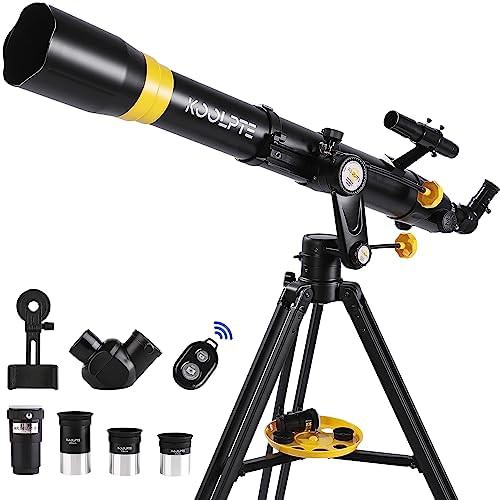
 9.1
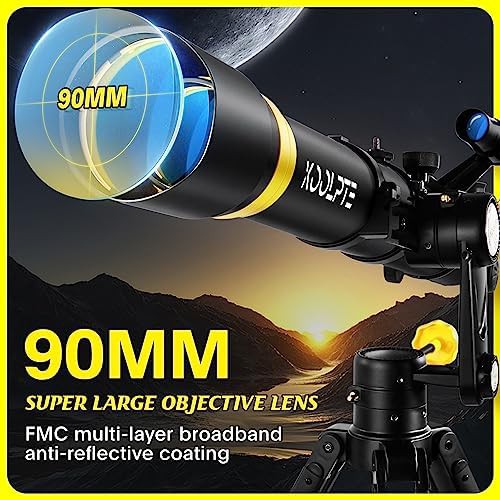
Koolpte
Black 90mm refractor telescope for deep sky
$250
Black For adults Refractor Altazimuth mounts 90mm aperture For deep sky
Extended focal lengths for serious high-power astronomical observation 9 telescopes · 8 brands
9.1
Black For adults Refractor Altazimuth mounts 90mm aperture For deep sky
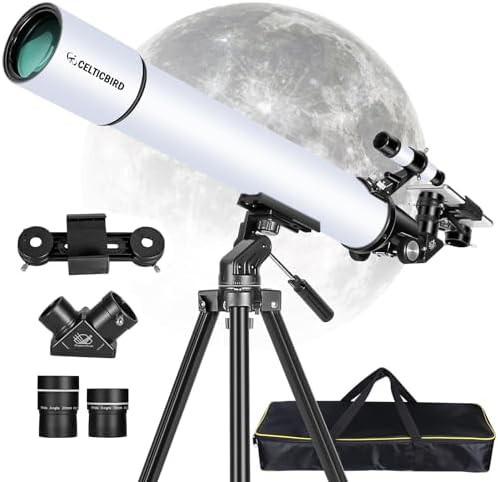 9.1
For adults For beginners Refractor Portable For travel Altazimuth mounts
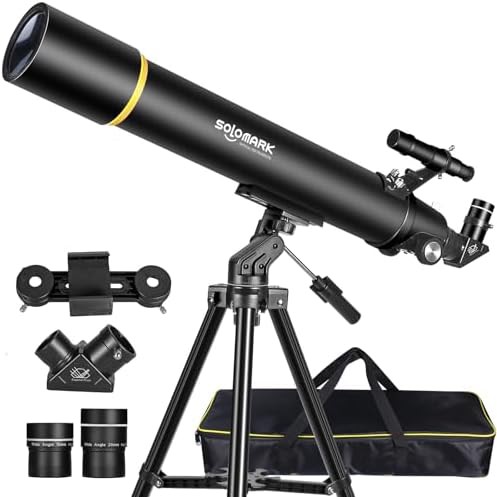 9.0
For adults For beginners Altazimuth mounts 80mm aperture Professional
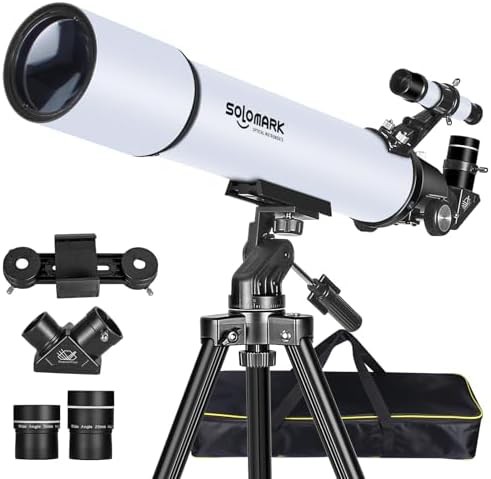 8.8
For adults For beginners Refractor Portable With phone adapter 80mm aperture
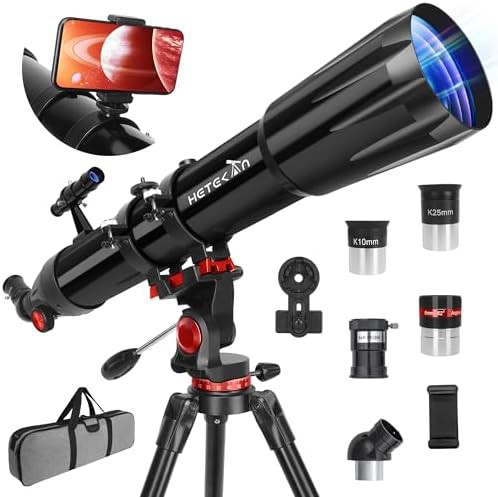 8.6
For adults For beginners Refractor For kids For moon viewing 90mm aperture
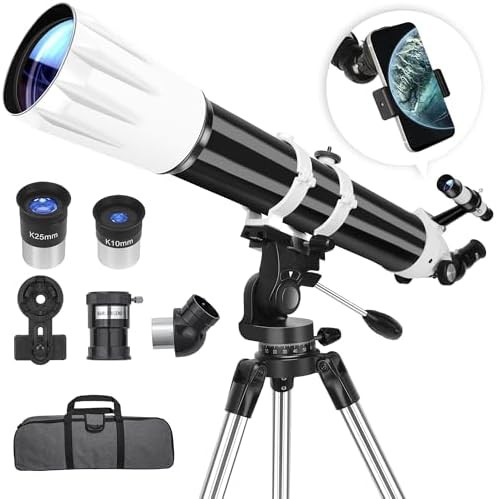 8.5
For adults For beginners Refractor For moon viewing With phone adapter Altazimuth mounts
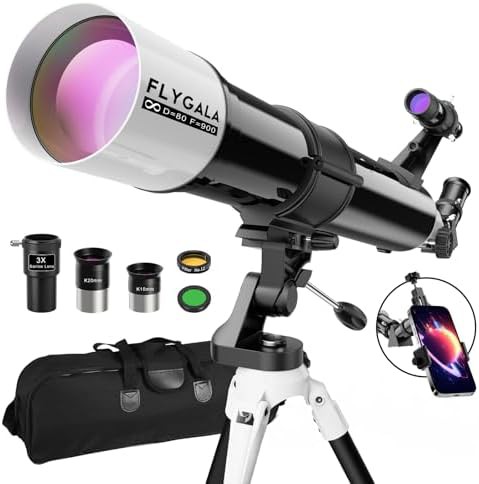 7.8
For adults For beginners Refractor Tripod included With phone adapter 80mm aperture
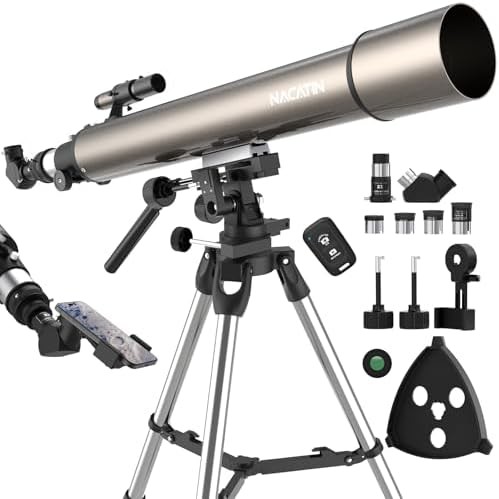 7.3
For adults For moon viewing Professional For deep sky
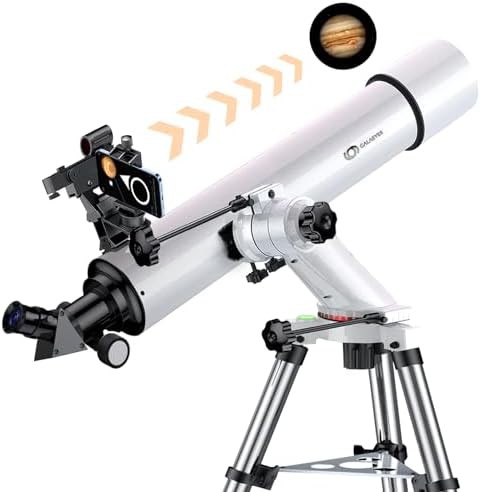 7.5
For adults For beginners For kids Altazimuth mounts Smart White
The moon and planets are the main targets, with enough magnification to show craters and cloud bands. Bright double stars and some globular clusters are also within reach, but wide deep-sky objects are framed too tightly for a good view.
Yes, if you want higher magnification for lunar and planetary viewing. The longer tube is less forgiving of a shaky mount, so a stable tripod and slow-motion controls make a real difference in use.
A 900mm focal length gives more magnification and a narrower field than 600mm or 800mm. That helps on the moon and planets but makes it harder to fit large star clusters or nebulae in the eyepiece.
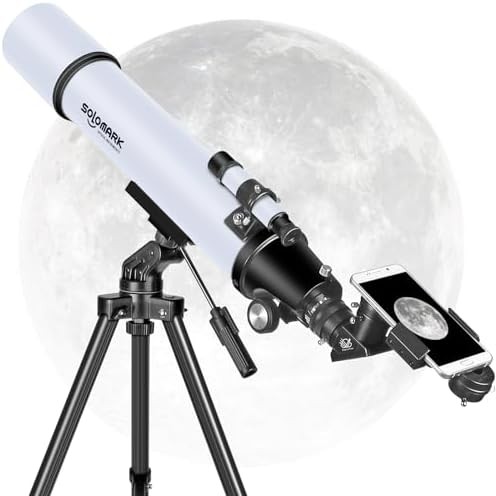
Many are sold as complete kits with an altazimuth tripod, a finder, and one or more eyepieces. Some include a carry bag and a phone adapter, while others are optical tubes only and need a separate mount.
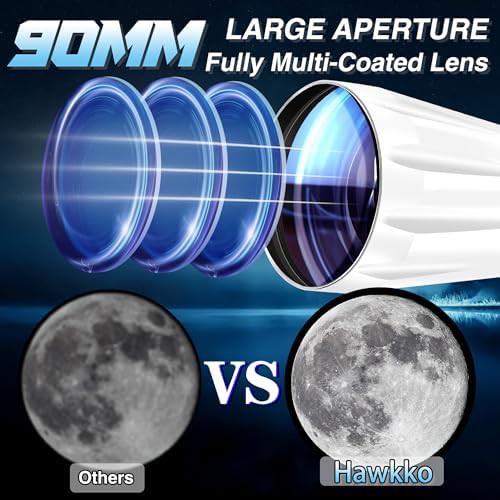
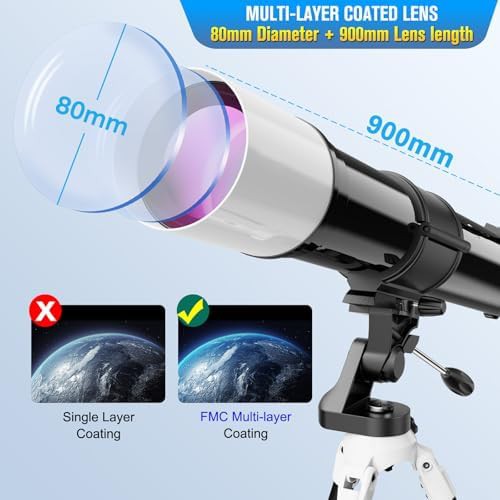
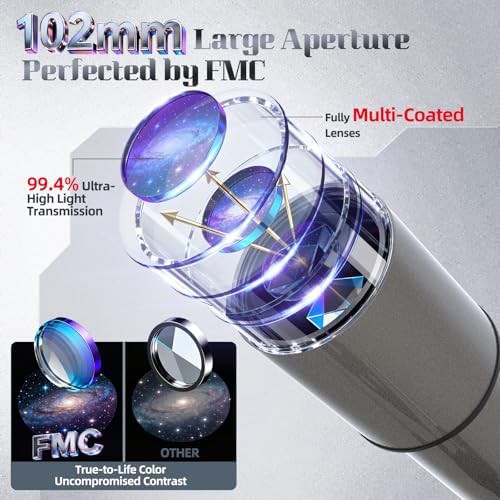
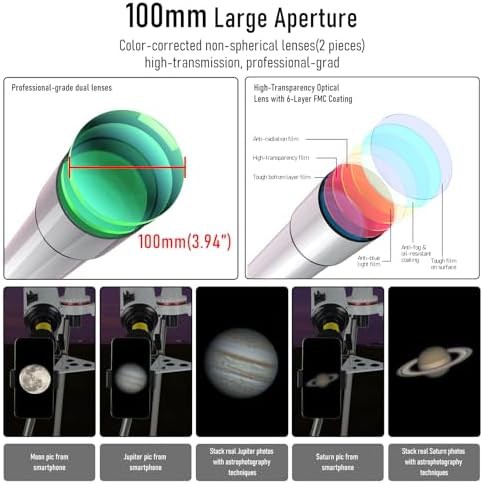
A 900mm focal length gives a narrower field of view and more magnification for a given eyepiece, which suits the moon, planets, and double stars. These telescopes are often refractors with apertures around 80mm to 102mm, mounted on altazimuth tripods. The longer tube makes them less compact than short-tube designs, but the extra reach is the point.
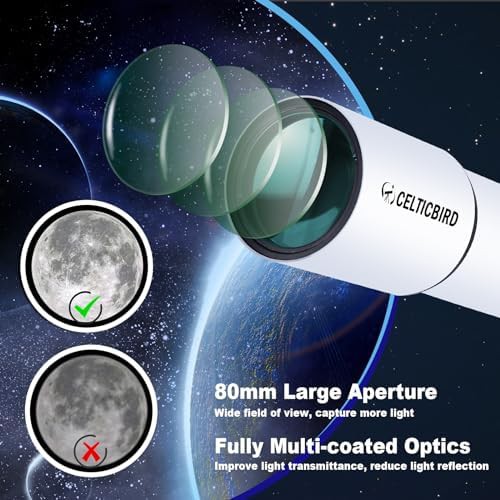
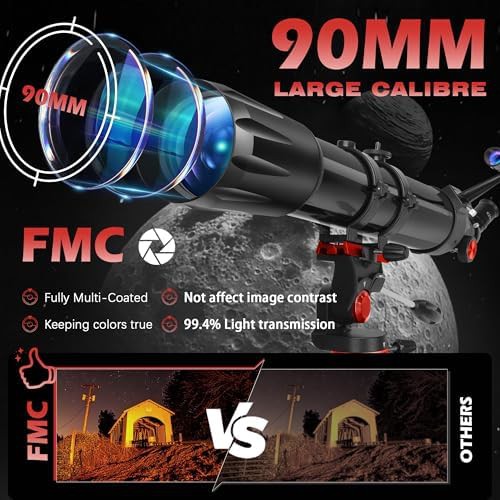
Most are achromatic refractors with multi-coated optics and a rack-and-pinion or helical focuser. The tubes are commonly black or white and sit on an altazimuth mount with slow-motion controls. Some include dual slow-motion rods for smoother tracking at high power, and a few come with a carry bag and phone adapter.
The mount is often the weak point on a long refractor, so look for a tripod with adjustable legs and a head that does not wobble when you touch the focuser. Slow-motion controls on both axes help you keep a target centered at high magnification. A finderscope is important because the narrow field makes star-hopping harder without one.
With an 80mm or 90mm aperture at 900mm focal length, the moon shows crisp craters and the planets show small disks with some detail. The field of view is tight, so wide star fields and large nebulae are less impressive than they would be in a shorter telescope. A 102mm version gathers more light and resolves finer detail, but the tube is heavier and demands a sturdier mount.