 8.8
Huanglininno
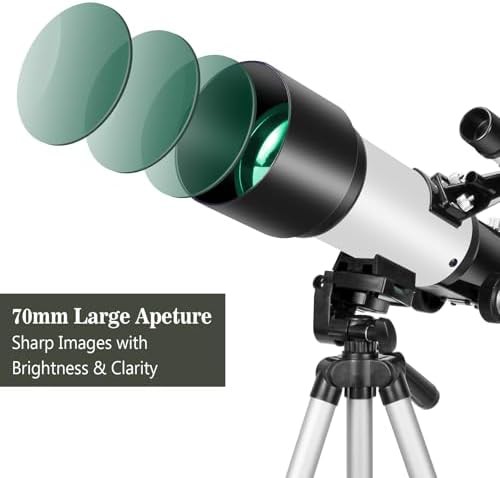
Professional high power 70mm aperture refractor
$19.99
For adults For beginners 70mm aperture Professional Budget
Compact focal lengths ideal for portable travel telescopes 15 telescopes · 12 brands
8.8
For adults For beginners 70mm aperture Professional Budget
 8.7
Refractor For kids Tripod included Altazimuth mounts 80mm aperture
 8.4
For adults For beginners Refractor Portable Tripod included With phone adapter
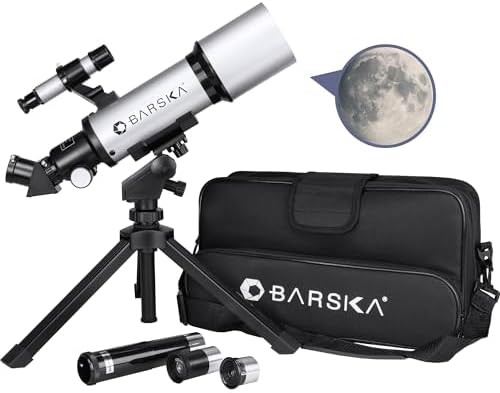 8.1
For beginners Refractor For kids Tripod included Tabletop mounts
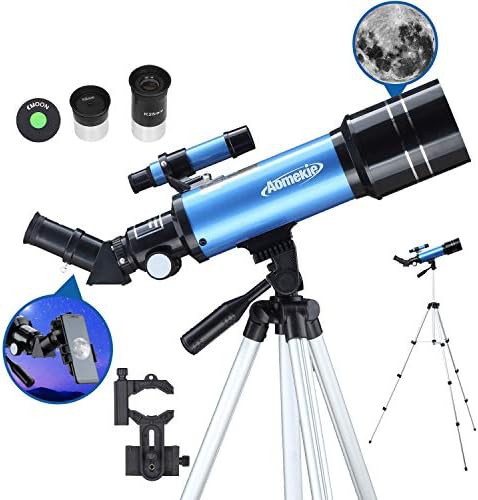 8.1
For adults For beginners Tripod included For travel With phone adapter 70mm aperture
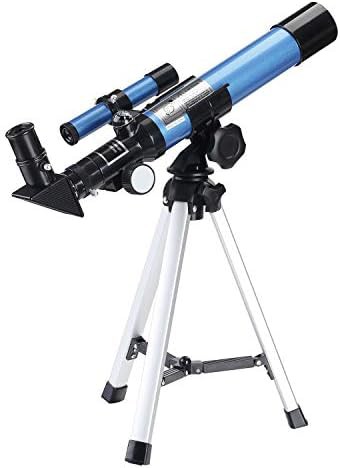 7.7
For beginners Refractor For kids For moon viewing Tripod included Budget
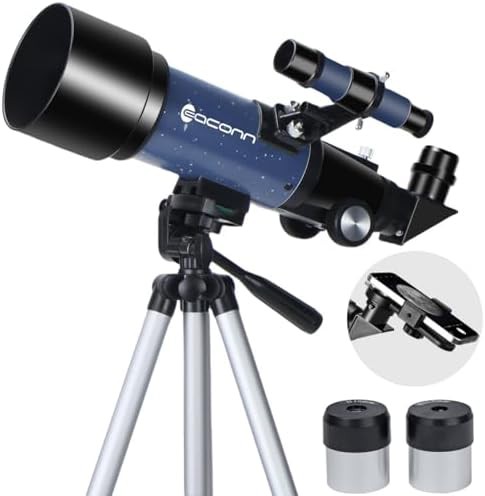 7.4
For adults For beginners Refractor For kids For moon viewing Portable
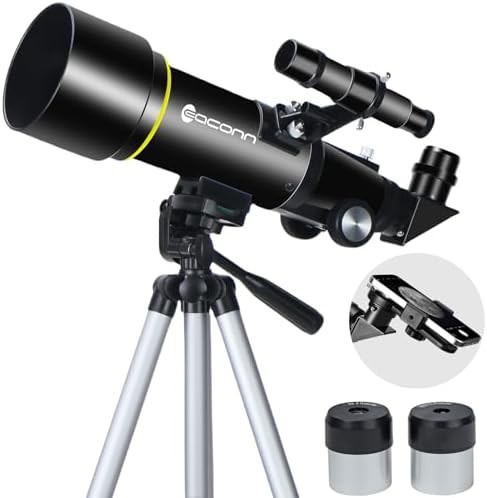 7.4
For adults For beginners Refractor For kids For moon viewing Portable
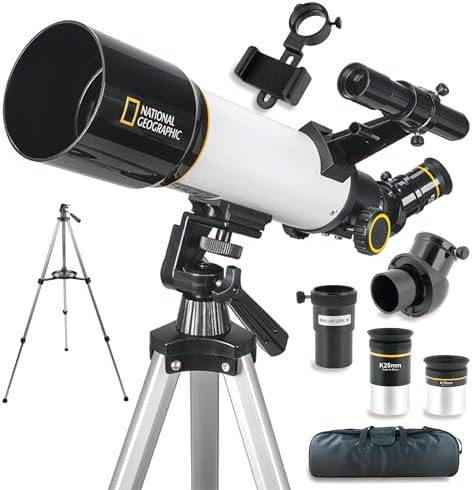 6.9
For adults Refractor For kids For moon viewing 70mm aperture For deep sky
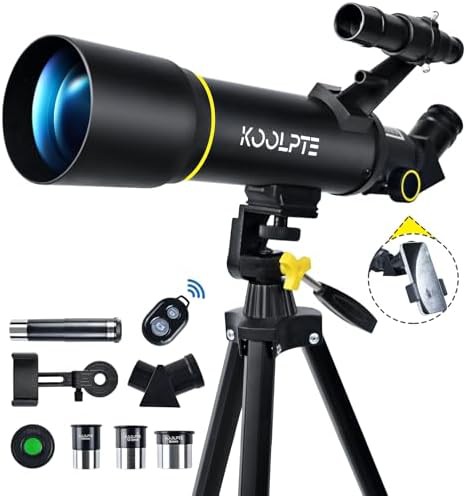
Black Refractor For kids Portable For travel 70mm aperture
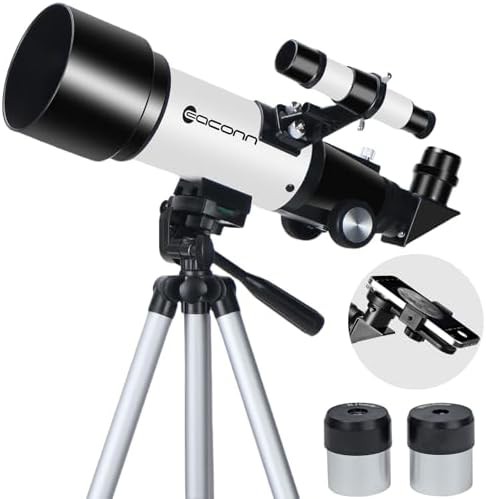
For adults For beginners Refractor For kids For moon viewing Portable
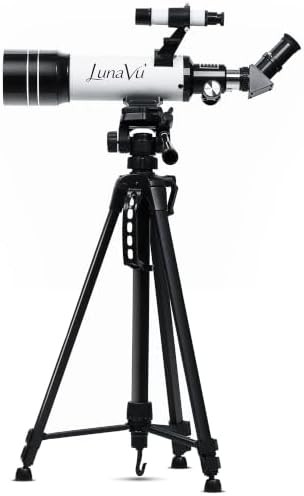
For adults For beginners Refractor For moon viewing Tripod included Altazimuth mounts
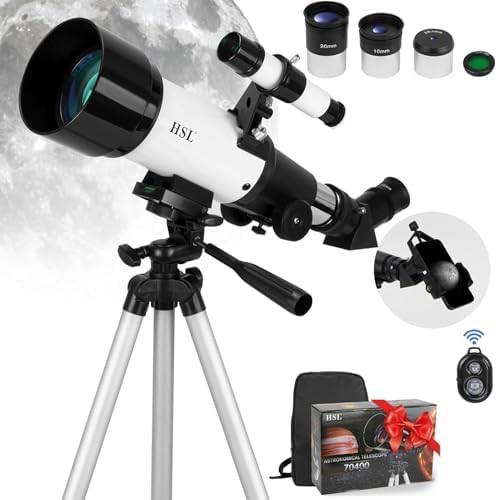 4.8
For adults For beginners Refractor For travel With phone adapter 70mm aperture
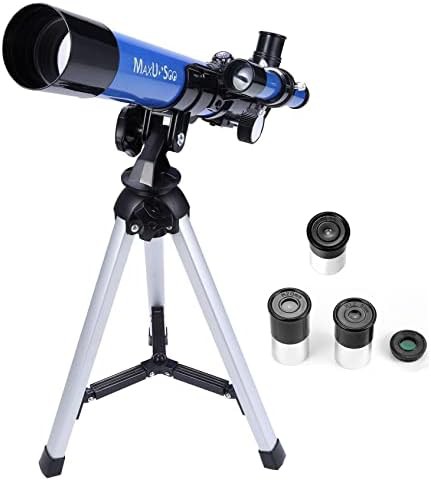
For beginners For kids Portable Tripod included For travel Budget
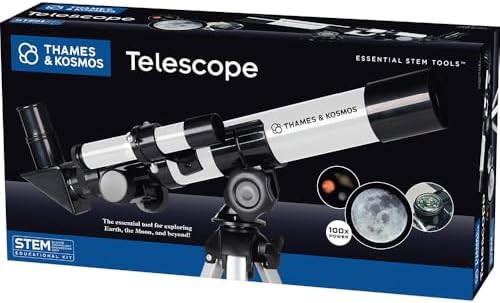
Refractor For kids For moon viewing Tripod included Budget
You can see the Moon in good detail, the rings of Saturn, Jupiter and its four bright moons, and wide star fields. Bright deep-sky objects like the Orion Nebula and the Pleiades are also within reach. It is best at low to medium power, not high magnification.
Yes, the short tube and light weight make it manageable for a child to carry and point. The wide field of view helps them find the Moon without frustration. A tabletop tripod version is often easier for small hands than a full-height tripod.
Yes, a refractor with a 400mm focal length works as a spotting scope for daytime use. You will need to use a diagonal or an erect-image prism to get the view right-side up. The wide field makes it easy to follow birds or ships.
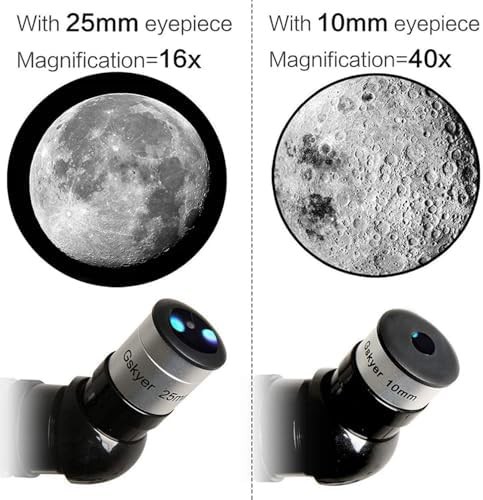
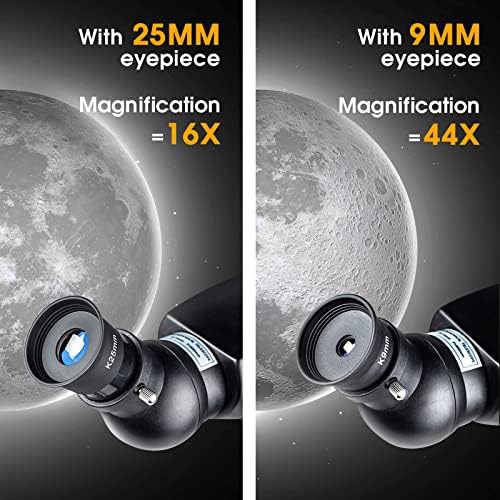
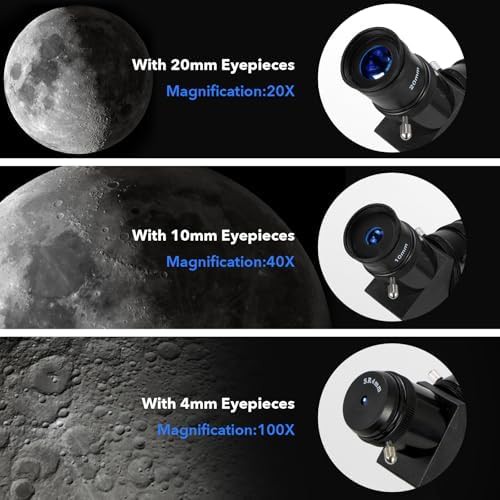
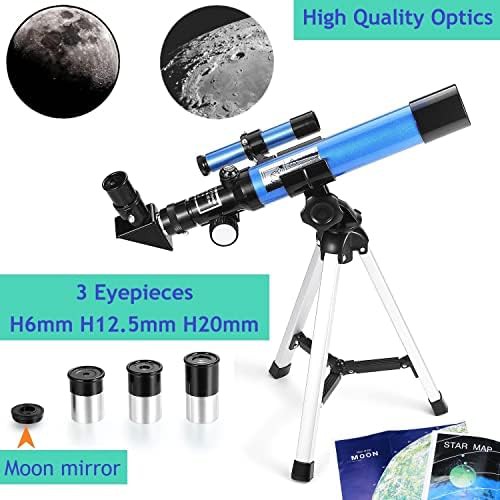
The two eyepieces give you two magnification levels from the same short tube. A longer eyepiece gives a wide, bright view for finding objects, and a shorter one boosts power for the Moon or planets. It is a simple way to cover low and medium power without buying extra glass.
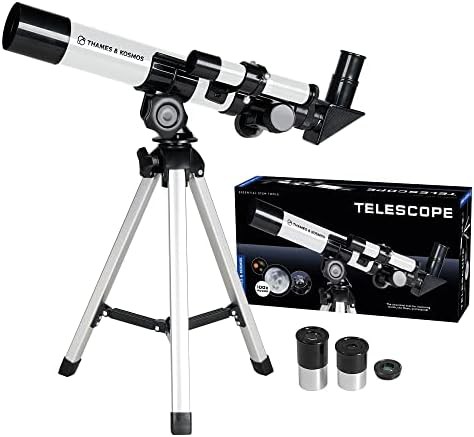
A 400mm focal length telescope is a compact instrument, usually a refractor with a tube short enough to hold in one hand or tuck into a carry bag. The short focal length gives a wide field of view, which makes it easy to find the Moon, bright planets, and terrestrial landmarks without hunting. These scopes are often sold as travel or beginner kits, and the whole package is light enough to take outside on a whim.
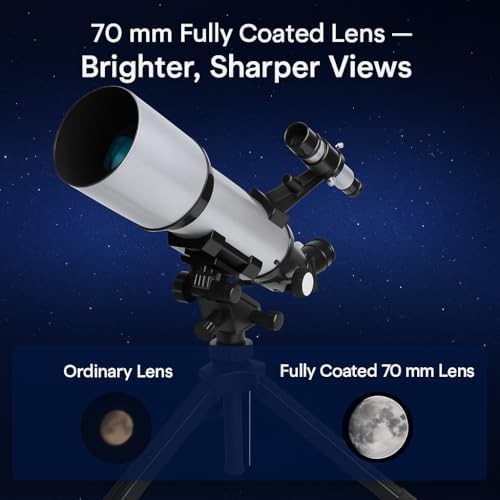
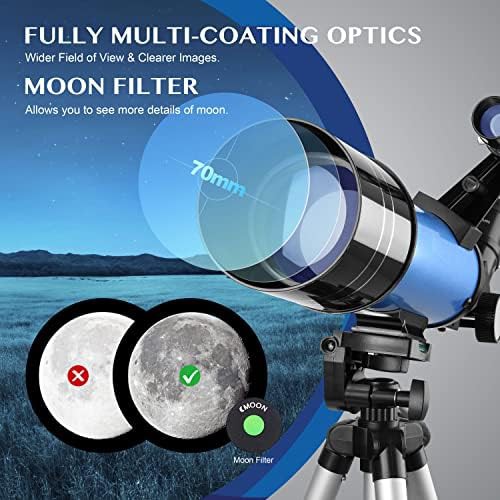
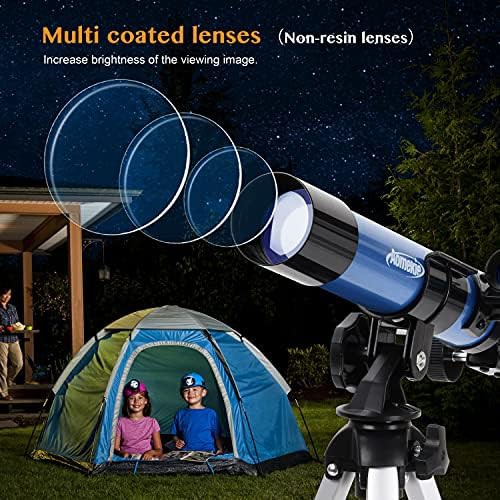
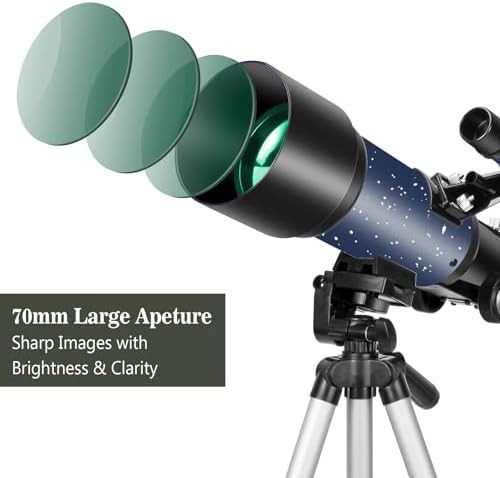
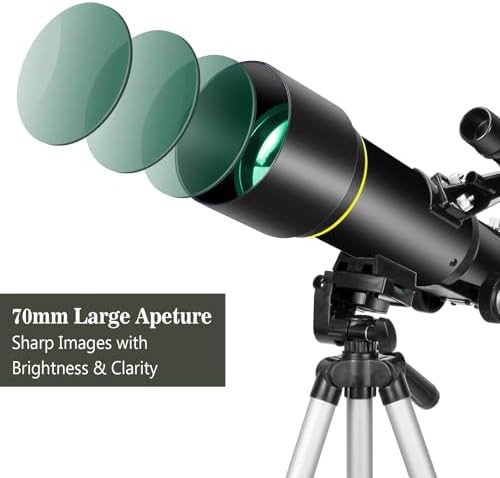
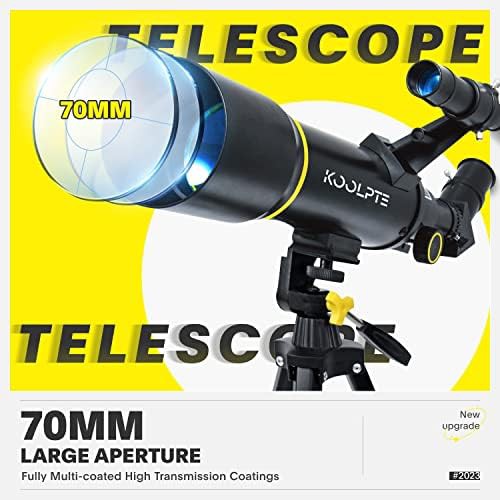
The aperture on these models is typically 70mm or 80mm, paired with a focal ratio around f/5.7 to f/6. That combination keeps the tube short and the image bright enough for low to medium power. You will not get high magnification out of a 400mm tube without pushing the optics past their useful limit, but for sweeping the sky and spotting craters, it works.
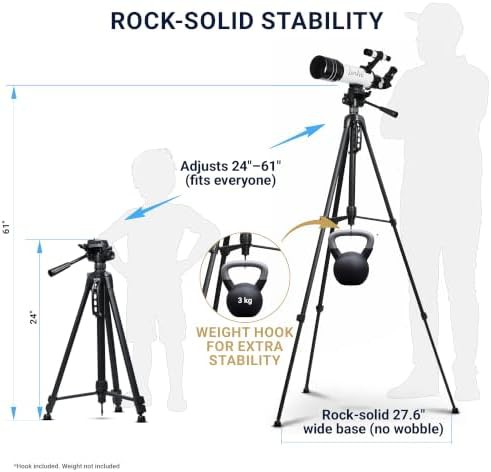
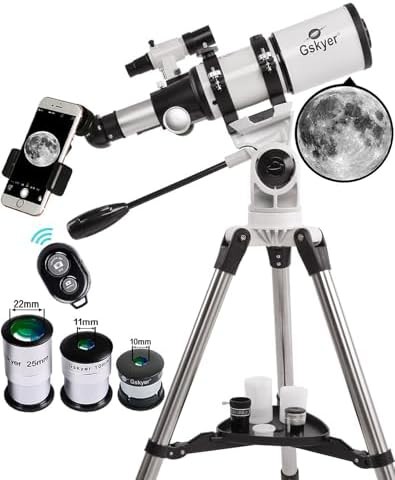
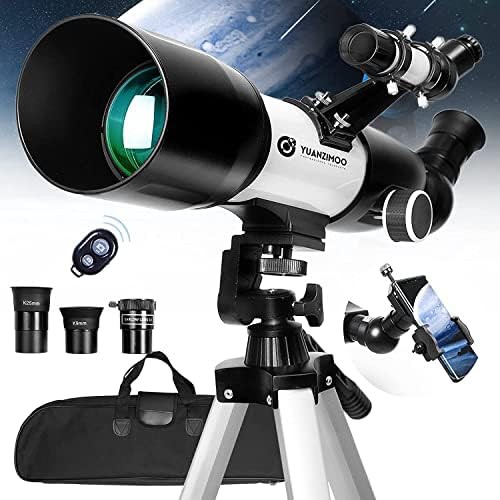
Most 400mm scopes sit on an alt-azimuth mount, either a simple yoke or a panhandle head, sometimes on a tabletop tripod and sometimes on a full-height adjustable tripod. The mount is manual, so you point and follow by hand. A few models include a smartphone adapter or a carry bag, and the eyepieces are usually low-power Kellner or similar designs, often a 20mm and a 10mm or a K6 and K25 pair.
The tube finish is commonly black or white, and the tripod is usually aluminum or a lightweight composite. Because the focal length is short, the scope is forgiving of a light mount, but a shaky tripod will still show up at higher powers. The focuser is a basic rack-and-pinion, and the diagonal is a standard 90-degree prism or mirror.