 8.0
Educational Insights
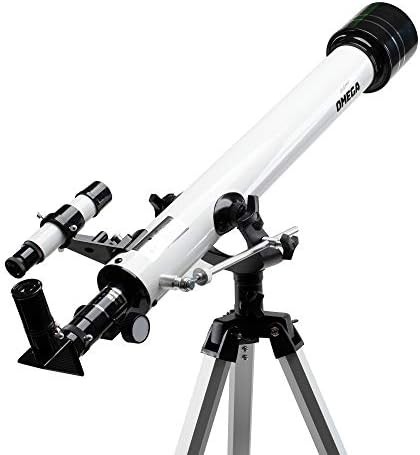
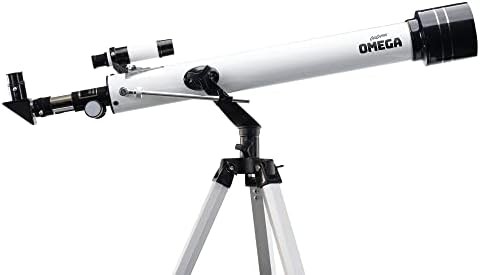
Omega 60mm refractor for young beginners
$130
For beginners Refractor For kids For moon viewing Portable For bird watching
Educational tools designed to teach science and astronomy through hands-on use 12 telescopes · 11 brands
8.0
For beginners Refractor For kids For moon viewing Portable For bird watching
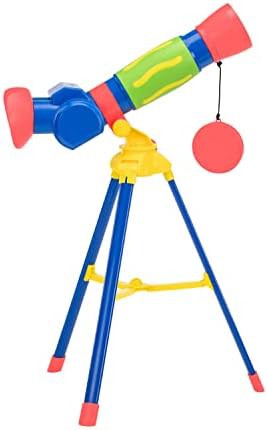 6.6
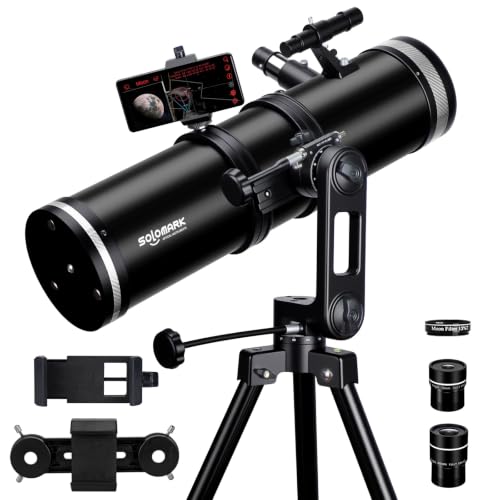
130mm aperture Adults Astrophotography Beginners Kids Moon viewing
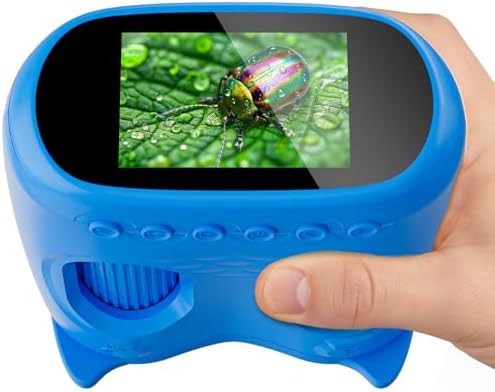 9.4
Blue For kids Portable Budget Digital
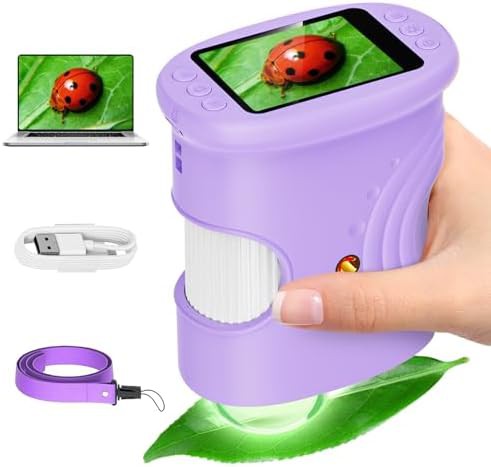 9.0
For kids Portable For travel Budget Digital
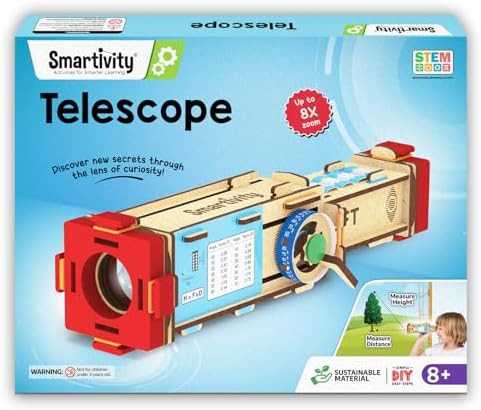 8.5
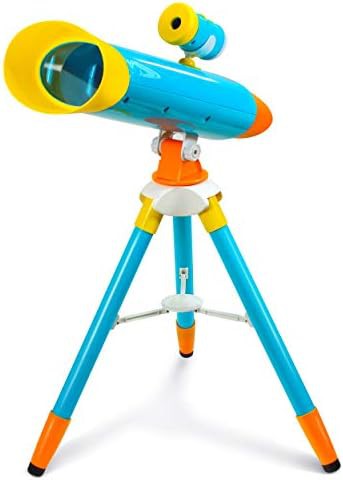 8.4
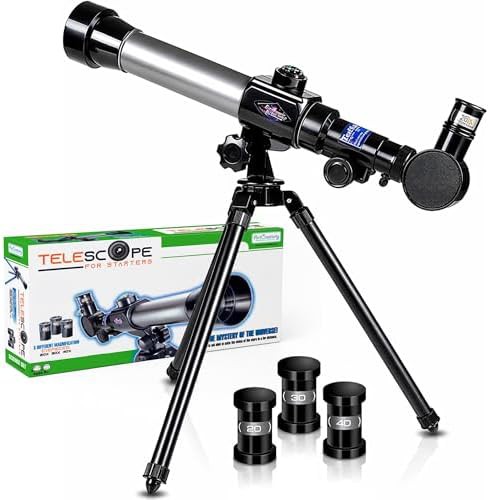 7.1
For beginners For kids Tripod included Budget Tabletop mounts
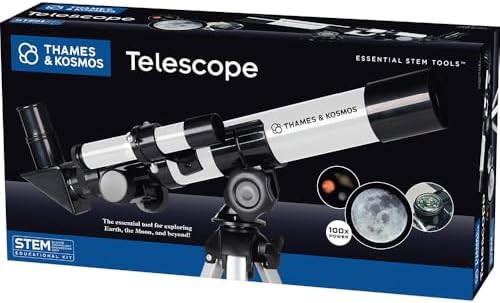
Refractor For kids For moon viewing Tripod included Budget 400mm focal length
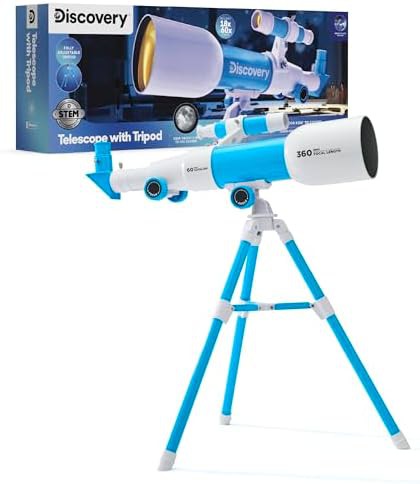
For beginners Refractor For kids For moon viewing Tripod included
A child around eight or older can usually set up a small refractor on a tripod with some guidance the first time. Younger kids will need an adult to point the scope and focus it. The projector-style and very low-power models are easier for ages three to six to use mostly on their own.
The moon shows craters and the terminator line clearly, and bright planets like Jupiter and Saturn appear as small disks with some detail. Terrestrial views of birds, trees, and buildings work well in daylight. Faint galaxies and nebulae are not realistic targets for this size.
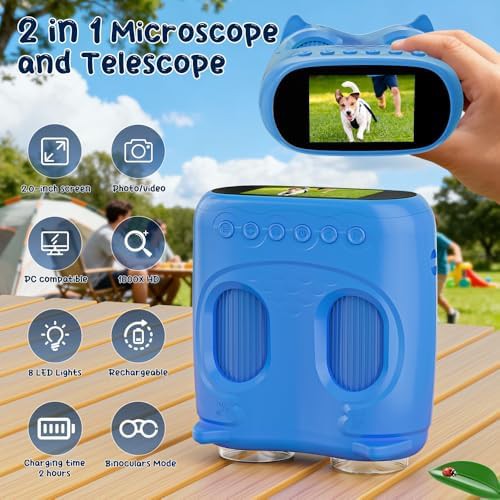
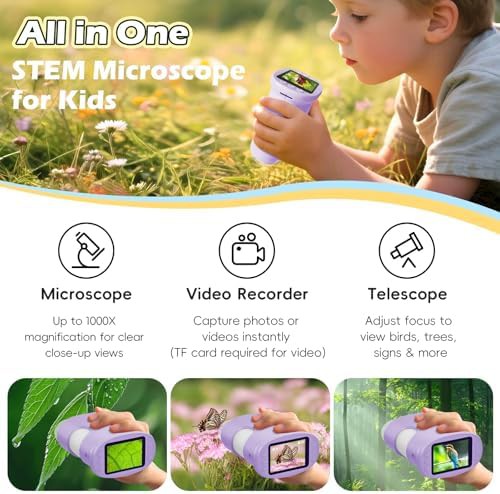
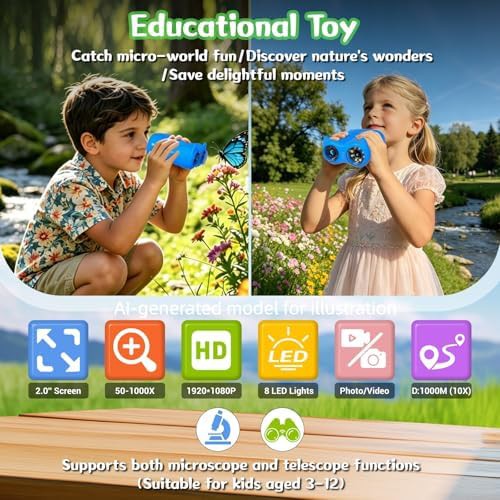
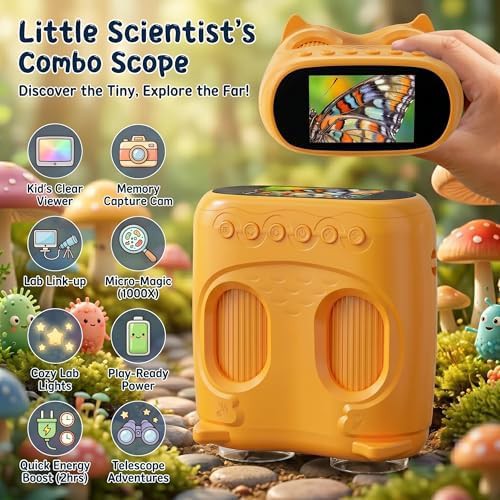
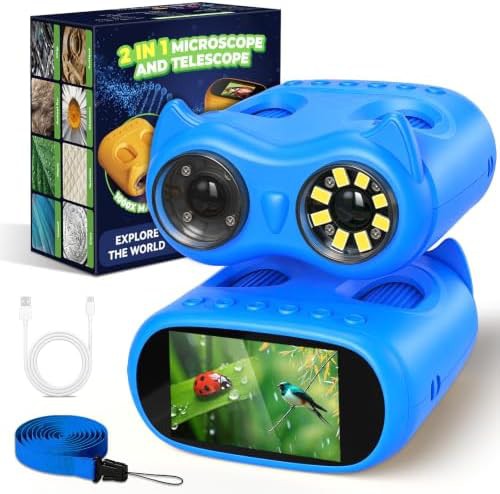
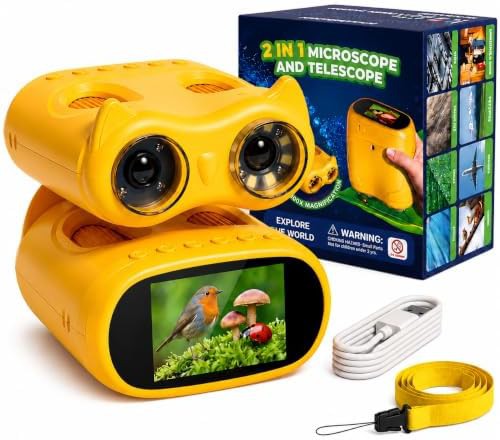
They are convenient for switching between activities without buying two separate tools. The microscope side is usually a handheld digital unit with a small screen, good for coins, leaves, and insects. The telescope side is a low-power pocket scope best for daytime viewing and casual sky watching.
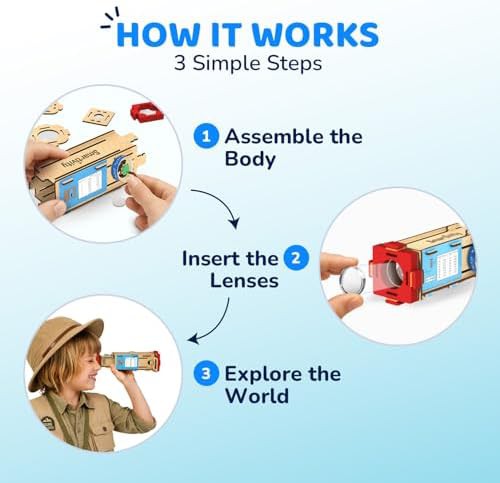
A telescope bought for STEM learning has to survive being handled by someone still figuring out how to hold it. That means simple mounts, few loose parts, and eyepieces that go in without much fuss. The point is to get a look at the moon or a distant tree, not to spend the evening aligning optics.
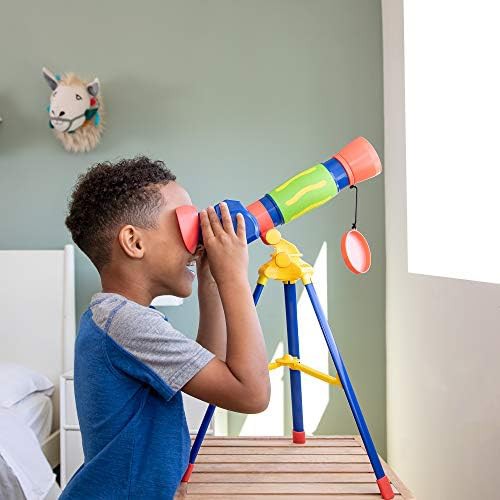
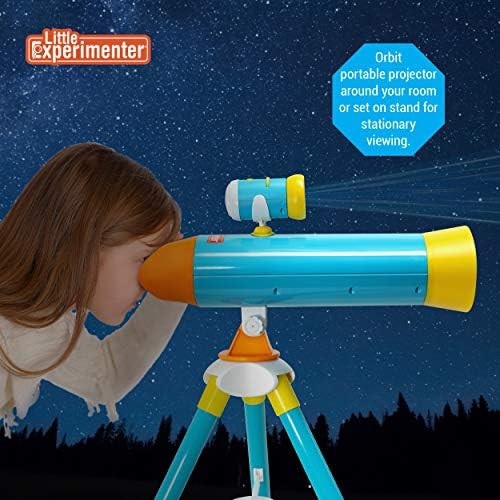
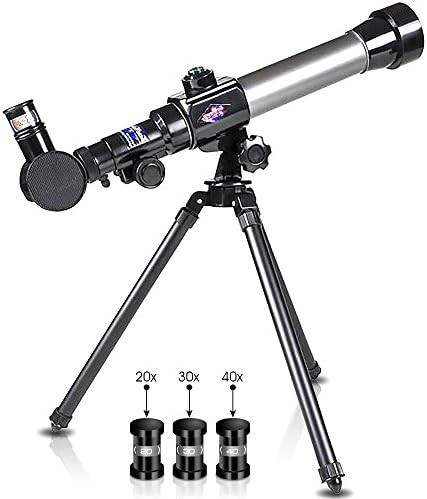
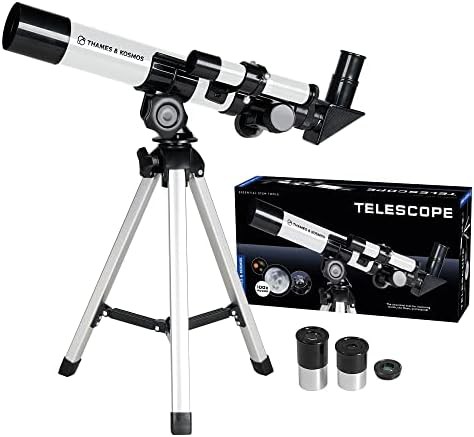
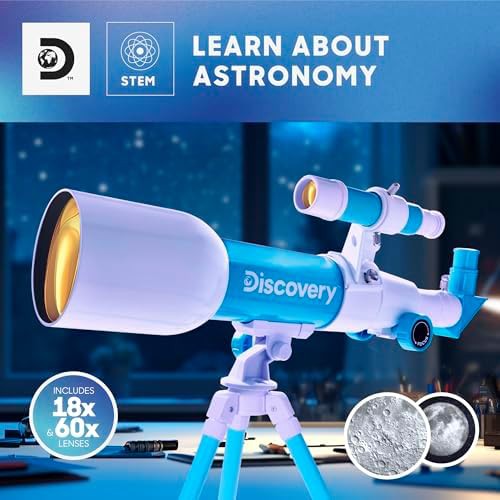
The selection leans toward small refractors on basic tripods, often with two or three eyepieces at low power. Some models pair a telescope with a microscope in one body, or add a projector that throws space images onto a wall. Blue and yellow bodies are common, and a few include a built-in compass or a smartphone adapter for capturing what you see.
If the goal is serious lunar detail or deep-sky objects, a small educational refractor will run out of light and magnification quickly. A tabletop Dobsonian or a larger reflector on an equatorial mount is the better path once the user knows they want to keep going. For a first look at craters and bright planets, though, the simple forms here are enough.
For ages three to six, a projector or a very low-power refractor keeps frustration down. Ages eight to twelve can handle a 60 mm refractor with a tripod and a couple of eyepieces, and may enjoy the 2-in-1 microscope models that switch between tasks. The digital handheld versions with a small screen suit kids who want to show someone else what they found.